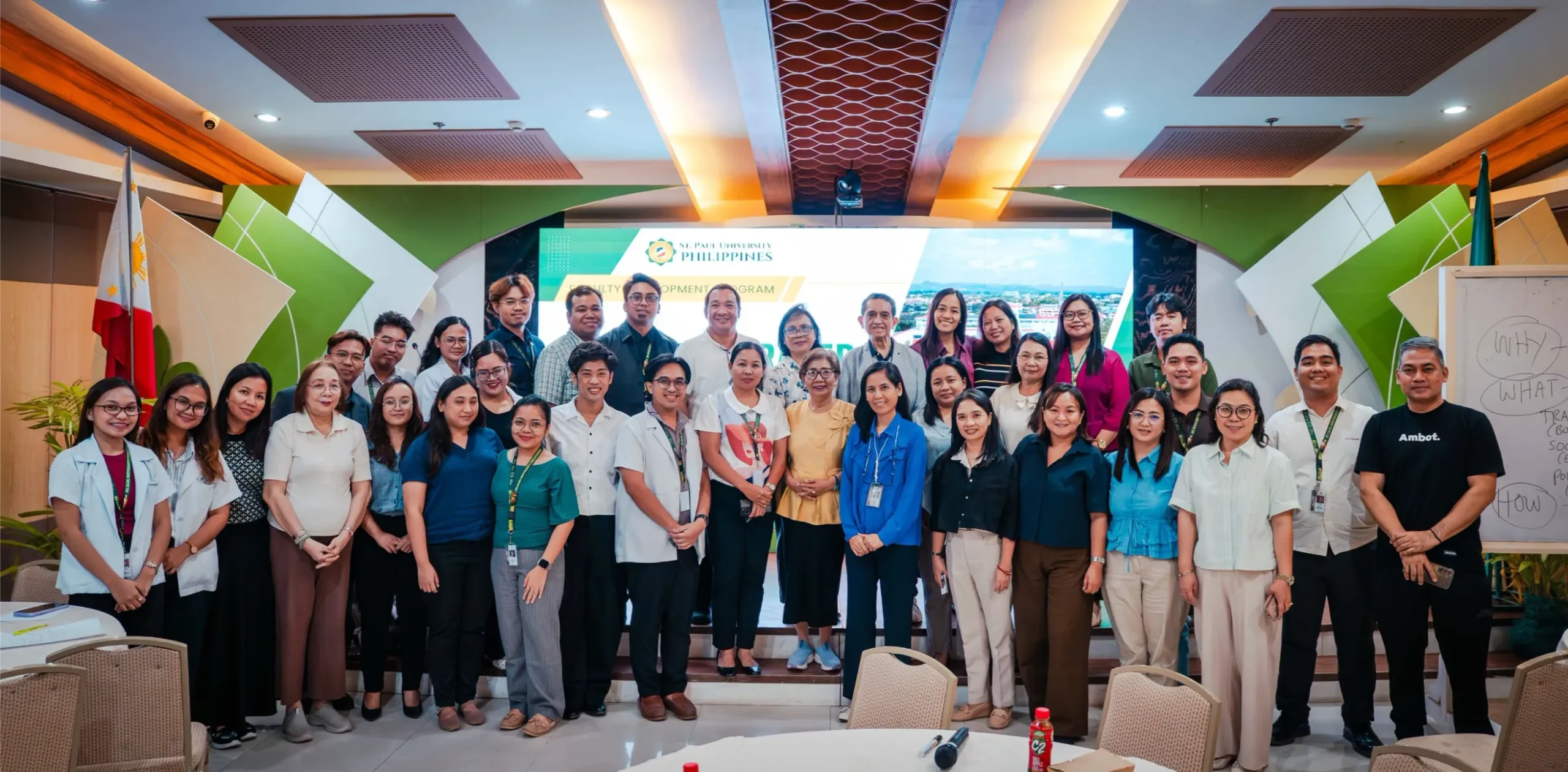
October 14, 2026 – SPUP conducted a dedicated Session on Work-Integrated Learning (WIL) as part of the University’s Faculty Development and Mentoring Program. Organized by the Human Resource Management Office, the activity gathered program coordinators and internship faculty to drive a strategic evolution from traditional On-the-Job Training (OJT) toward a more purposeful, holistic Work-Integrated Learning framework. While conventional OJT often focuses on basic task completion in workplace settings, WIL intentionally bridges classroom theory with meaningful professional practice by embedding intentional learning outcomes, reflective learning, and continuous faculty mentorship into experiential programs. By aligning academic instruction with modern industry expectations, SPUP aims to establish a unified direction in cultivating students’ technical competencies, standard workplace behaviors, and positive professional attitudes, while underscoring the necessity of continuous faculty upskilling to maintain high standards of student mentorship.
The session featured key insights from Dr. Federico Macaranas (Member, SPUP Board of Trustees) and Dr. Rene E. Bersoto (Professor, SPUP Graduate School), who emphasized how shifting to WIL aligns with national educational directions and industry trends. Dr. Macaranas highlighted EDCOM II’s private sector response regarding Theory-to-Practice approaches under the Ten-Year National Education and Workforce Development Plan. Together, their presentations demonstrated that WIL transforms routine workplace tasks into rich learning opportunities, requiring internship coordinators to actively nurture ethics, adaptability, and professional discipline. In the session, participants explored practical strategies to help students navigate real-world career environments smoothly, reinforcing the idea that instilling a growth-oriented mindset during internships is vital for long-term career success and sustainability.
Through this capability-building initiative, SPUP reaffirmed its commitment to elevating experiential education and producing job-ready graduates who are well-equipped for the modern workforce. By empowering program coordinators to lead this paradigm shift from routine OJT to comprehensive Work-Integrated Learning, the university ensures that student internships serve as a true bridge between academic preparation and societal contribution. This strategic transformation not only enhances student readiness and professional confidence but also strengthens SPUP’s academic-industry partnerships, reinforcing its role in graduating competent, ethical, and highly adaptable professionals capable of making meaningful contributions to their respective fields.